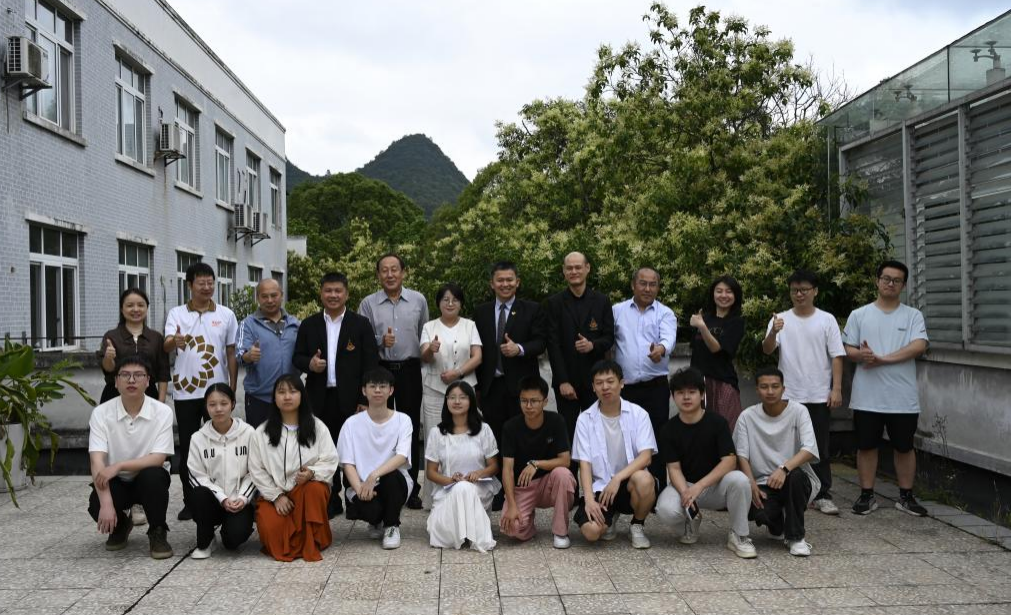
On the morning of June 17 at 10:30, a delegation from the Institute of Science of Suranaree University of Technology (SUT) visited the College of Physics of Guizhou University (GZU) for an exchange meeting and a Study Abroad Briefing for Undergraduate Students, held in the Conference Room 302 of Zhishan Building.
The SUT delegation included Prof. Dr. Santi Maensiri, Dean of the Institute of Science, SUT; Assoc. Prof. Dr. Ayut Limphirat, Vice Dean; Sirichok Jungthawan, Chair of the School of Physics; and Prof. Dr. Yupeng Yan, Director of Center of Excellence in High Energy Physics and Astrophysics, SUT. Representatives from our university included Jiedan Wang, Deputy Director of the Office of International Exchange and Cooperation; Dingbo Lu, Deputy Secretary of the Party Committee, College of Physics; Xiaosi Qi, Vice Dean; and Yanhui Liu, Vice Dean. The meeting was chaired by Vice Dean Yanhui Liu.
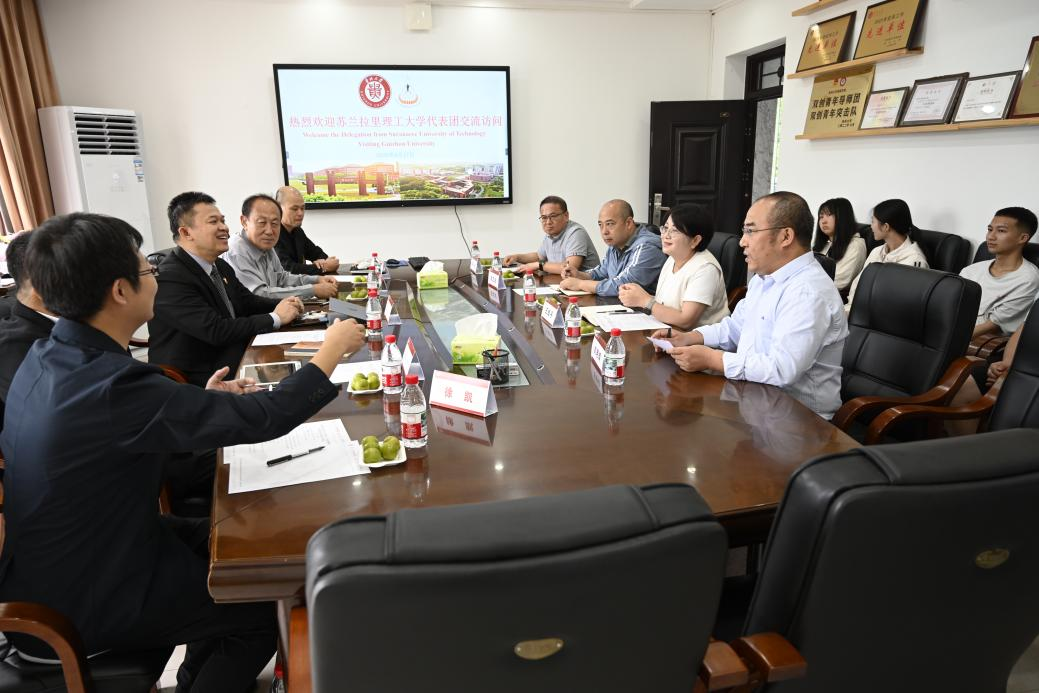
The event consisted of two parts: a seminar on strengthening academic cooperation between the two institutions, and interviews for undergraduate physics students applying for admission of further studies at SUT.
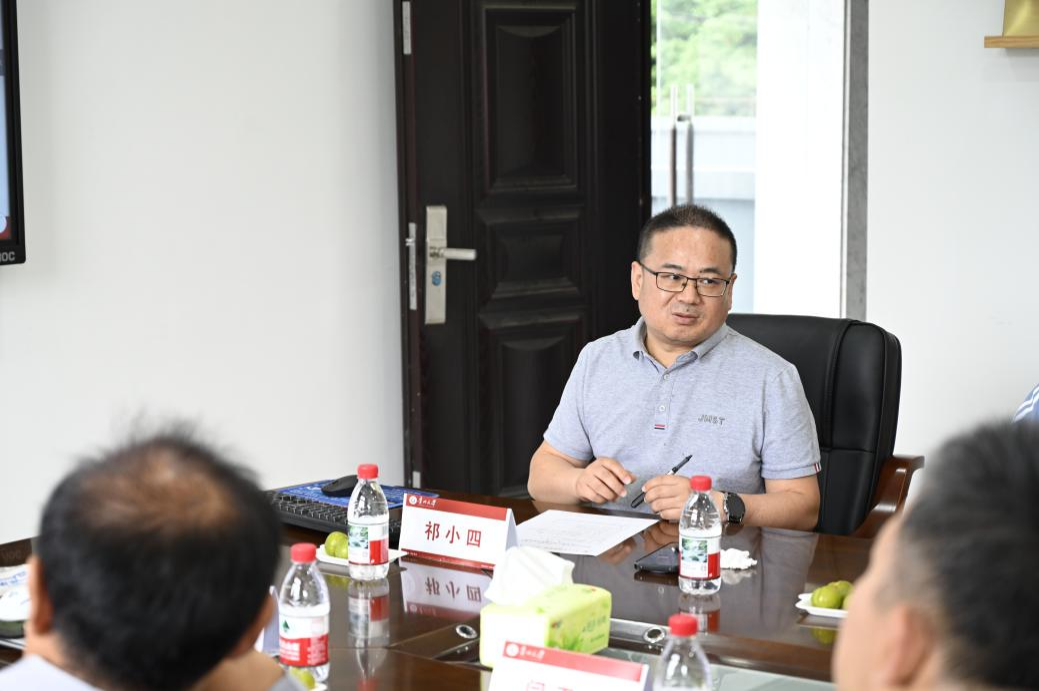
In the first session, Vice Dean Yanhui Liu delivered a welcome speech, expressing a warm reception to the SUT delegation and expressing the hope that both sides will further strengthen practical cooperation in scientific research and joint talent training by leveraging the complementary strengths of their physics disciplines.
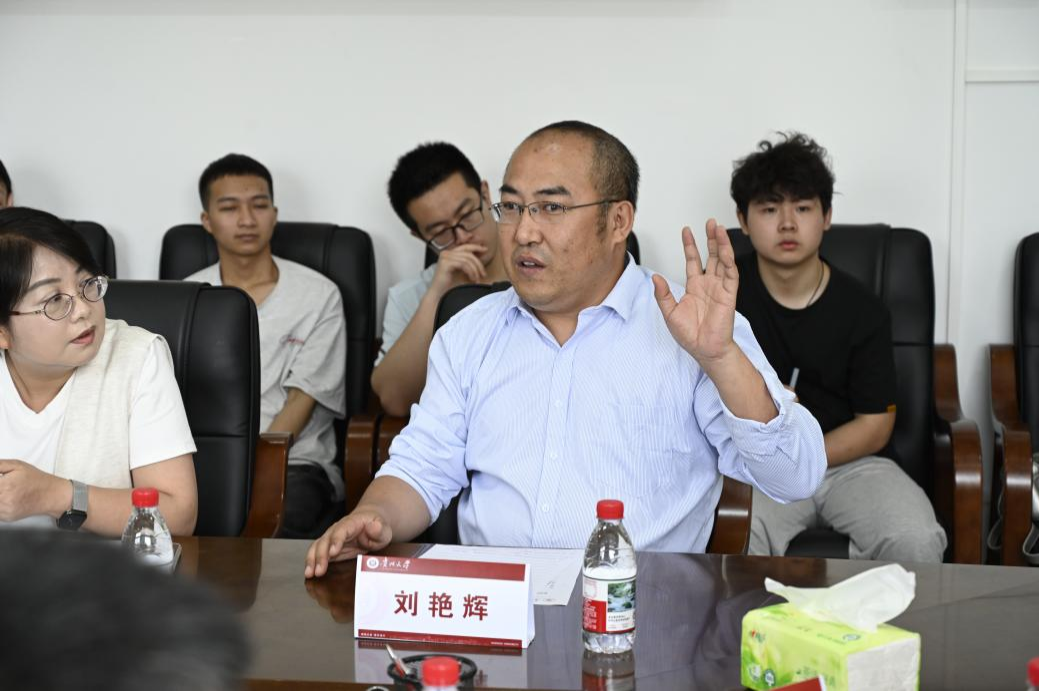
Vice Dean Xiaosi Qi provided a comprehensive introduction of the College of Physics, covering its faculty team and overall research structure. He presented the major research areas in the college of physics, including theoretical physics, condensed matter physics, optics, and theoretical and experimental astrophysics, and highlighted representative research achievements as well as existing research platforms and disciplinary features.
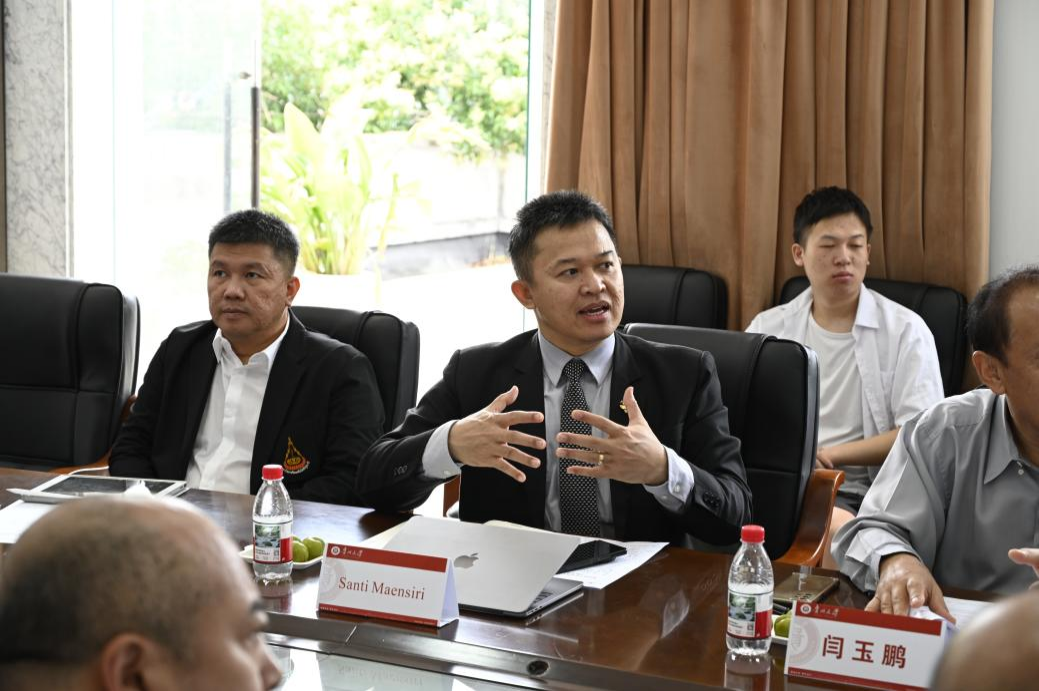
Dean Santi Maensiri introduced the Institute of Science at SUT, outlining its six core research areas: materials and nanomaterials, nuclear and particle physics, condensed matter physics, astrophysics, laser and photonics, and quantum technology. He also shared information on the university’s research platforms, dual-track international graduate training system, full scholarship scheme, industry internship arrangements, and the existing China–Thailand joint laboratory in nuclear physics. He expressed his expectation that both universities would further expand exchanges and promote multi-field, collaborative development.
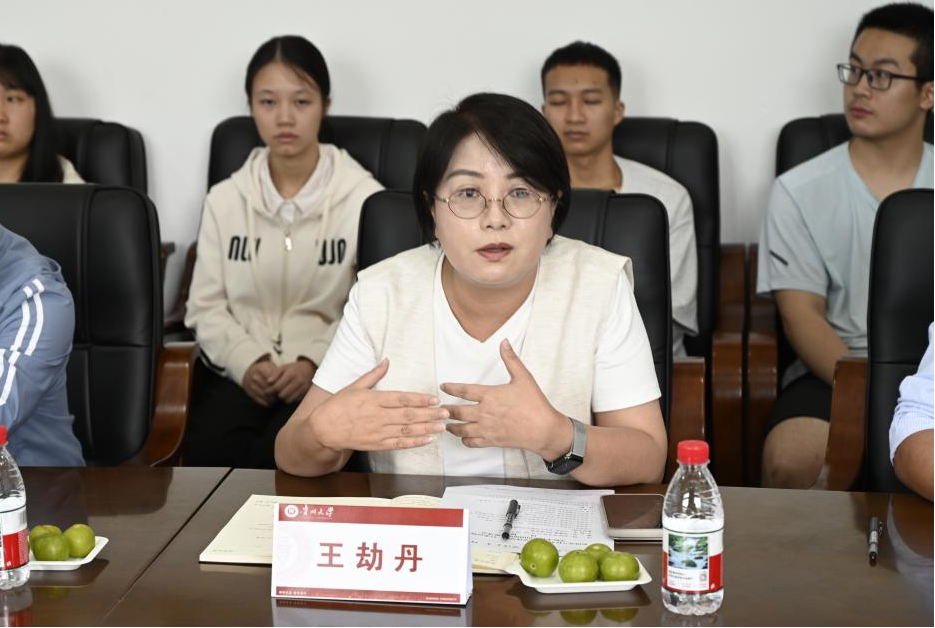
Jiedan Wang exchanged views on the university’s policies for international cooperation and student overseas study support, providing institutional guidance at the university level for future collaboration between the two Institutes.
Student Interviews for Overseas Study
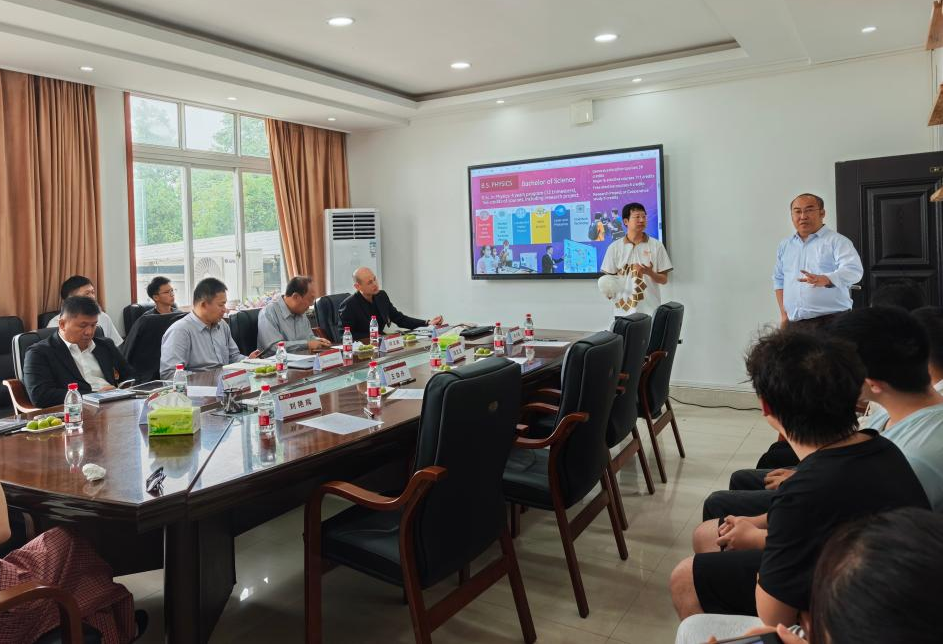
In the second session, interviews were conducted for undergraduate physics students applying for admission to the Master’s program at SUT, alongside a Q&A session on study abroad arrangements. The delegation responded in detail to students’ questions regarding admission criteria, curriculum structure, scholarship policies, and internship arrangements, offering comprehensive academic and policy guidance to students intending to study abroad.
Outcomes and Future Prospects
The exchange meeting established a stable and effective channel for communication in physics between China and Thailand. It further expanded overseas study opportunities for undergraduate students in the College of Physics and strengthened the foundation for long-term scientific research collaboration between the two universities.
In the next stage, the College of Physics will steadily advance initiatives like Sino-Thai faculty exchanges, shared research platforms, and integrated joint degree programs for bachelor's, master's, and Ph.D. students. The College will continue to drive the internationalization of its academic disciplines and improve efficiency, leveraging high-level international exchanges to support its high-quality development.